Every few years, the paint protection film market takes a noticeable leap forward. Customers walk into Phantom PPF’s shop or browse our online store, asking a familiar question: “Is there really a difference between PPF brands?” One recent customer had a brand-new performance sedan and had spent weeks comparing online reviews, YouTube demos, and installer testimonials, but still didn’t feel confident. That’s understandable. When every manufacturer claims “industry-leading clarity” and “self-healing technology,” choosing the right film becomes overwhelming fast.
This guide solves that problem.
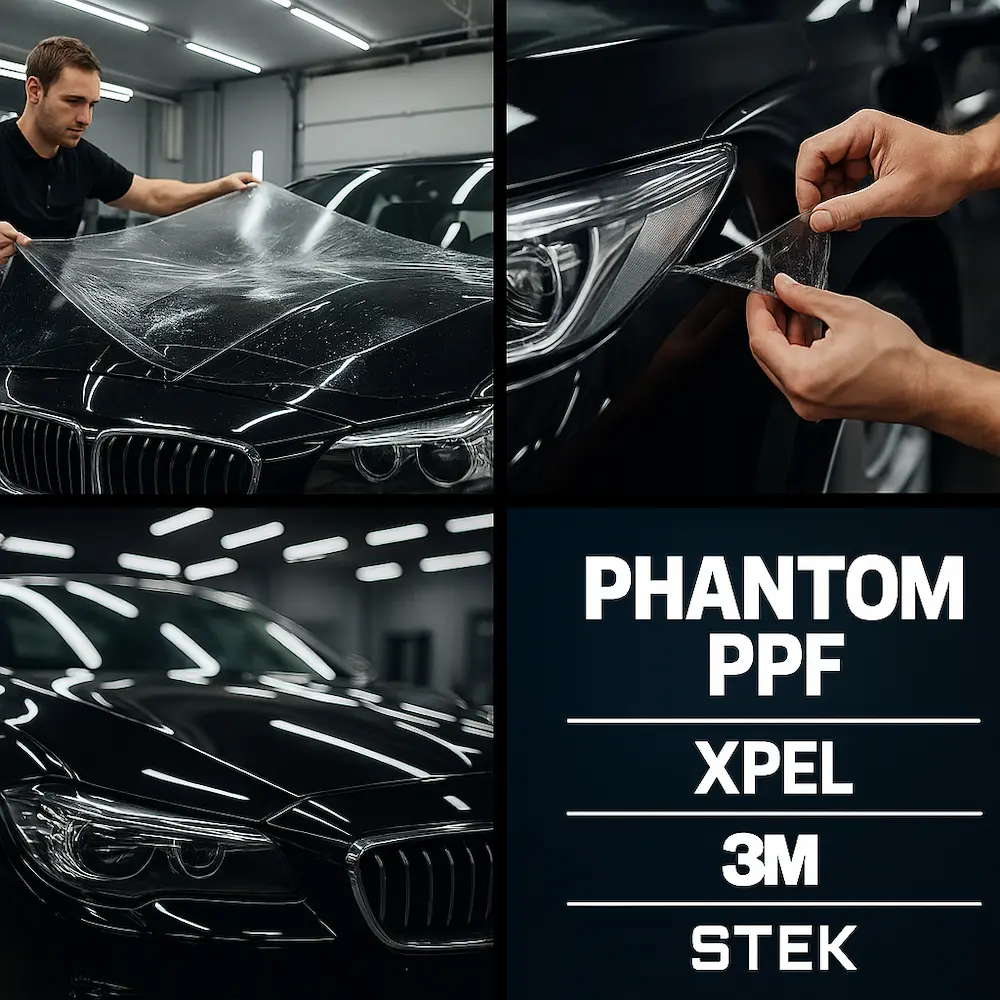
Below is a clear, technical, and practical comparison of Phantom Paint Protection Film (PPF) versus the three most recognized brands in the market: XPEL, 3M, and STEK. Whether you're evaluating a full-car installation or shopping for precision-cut DIY PPF kits, this breakdown explains how each option performs in the areas that matter most in 2025: durability, installation experience, aesthetics, and real-world protection.
Before diving into individual brand-to-brand comparisons, here are the performance factors that matter most when evaluating PPF:
Each section below analyzes how Phantom PPF competes across these categories.
XPEL is one of the most recognized PPF manufacturers, well-known for its legacy installer network and signature self-healing top coat. This Phantom vs XPel comparison highlights differences between a flexible, consumer-accessible PPF system and a traditional installer-only ecosystem.
Phantom PPF is engineered for high-gloss optical clarity with minimal orange peel. Once cured, the film lies flat and produces a clean, glass-like finish that blends seamlessly with modern OEM paint. This consistency is noted by both professional installers and vehicle owners using Phantom’s precision-cut kits.
XPEL also delivers strong clarity and depth, particularly when installed by experienced professionals. Depending on lighting conditions and installation technique, XPEL films can exhibit slightly more surface texture.
Advantage: Phantom PPF for smoother, low-texture gloss; both films perform well visually.
Both Phantom PPF and XPEL utilize advanced elastomeric top coats designed to repair light swirl marks and micro-scratches when exposed to heat. In everyday conditions, sunlight is typically sufficient to activate self-healing in both films.
Advantage: Tie, comparable self-healing performance, with Phantom offering competitive results at a more accessible price point.
Phantom PPF is formulated with balanced tack and predictable stretch, allowing clean edge work, controlled repositioning, and consistent results across both professional installations and precision-cut DIY applications.
XPEL is engineered primarily for professional installer environments. Its higher initial tack and installer-focused material behavior are well-suited for trained technicians but are not intended for consumer DIY installation. XPEL does not offer consumer-available, vehicle-specific DIY kits.
Advantage: Phantom PPF for installation flexibility and accessibility.
When properly installed and maintained, both Phantom PPF and XPEL resist yellowing, staining, and edge-lifting. Phantom’s adhesive system is designed to maintain bond strength while minimizing residue during future removal, which can be beneficial for owners who plan to replace or update protection over time.
XPEL’s pricing often reflects its legacy brand positioning and installer-network distribution model. Phantom PPF delivers premium-grade clarity, impact resistance, and self-healing performance without the added cost typically associated with installer-exclusive brands.
Best For:
Drivers seeking top-tier visual clarity and self-healing protection, along with the option to choose professional installation or precision-cut DIY kits, without paying brand-inflated pricing.
3M is one of the oldest names in automotive film technology. Their PPF line is known for long warranties and strong brand recognition. This Phantom vs 3M comparison contrasts a legacy brand with newer-generation PPF technology.
3M paint protection films provide dependable clarity but tend to exhibit a slightly more noticeable surface texture compared to newer-generation PPF formulations. Phantom PPF is engineered to prioritize a smooth, uniform finish that blends cleanly with modern high-gloss OEM paint systems.
Advantage: Phantom PPF for smoother clarity and refined gloss appearance.
3M films utilize a durable top coat designed to resist surface damage, though a self-healing response may require higher heat exposure and longer activation time. Phantom PPF incorporates a modern elastomeric top layer engineered for faster, more consistent self-healing under typical sunlight and everyday conditions.
Advantage: Phantom PPF for quicker and more reliable self-healing performance.
3M paint protection films are engineered primarily for professional shop installation. Material stiffness, adhesive behavior, and handling characteristics assume trained installers and controlled environments. As such, 3M does not offer consumer-available, vehicle-specific DIY precision-cut kits.
Phantom PPF is designed to support both professional installers and vehicle owners installing at home using precision-cut patterns. Balanced tack and predictable stretch allow accurate alignment and repositioning without requiring advanced installation equipment.
Advantage: Phantom PPF for broader accessibility and installation flexibility.
Both Phantom PPF and 3M offer strong resistance to discoloration, UV exposure, and environmental contaminants. Phantom PPF places added emphasis on chemical resistance to common road hazards such as bug residue, bird droppings, road oils, and petroleum-based debris.
3M’s long-standing brand recognition and professional-only distribution model can contribute to a higher overall cost. Phantom PPF delivers modern performance characteristics, clarity, self-healing, and impact resistance, without the pricing structure often associated with legacy installer-exclusive brands.
Best For:
Enthusiasts seeking a premium finish and modern top-coat performance with a simpler DIY-friendly installation process.
STEK is known for its specialty aesthetic PPF products, colored films, hydrophobic top coats, and cosmetic-focused innovations. This Phantom vs Stek comparison focuses on practicality versus specialty-focused film offerings.
STEK gloss paint protection films are known for strong optical clarity, particularly in controlled professional installations. Some of STEK’s specialty coatings and aesthetic-focused films can make installation more sensitive, especially on complex panels.
Phantom PPF maintains a balanced, installer-friendly formulation designed to deliver high-gloss clarity while remaining consistent and predictable during installation. Once cured, Phantom films produce a clean, uniform finish comparable to other premium-grade competitors.
Advantage: Tie in overall clarity; Phantom PPF for installation consistency.
STEK is widely recognized for aggressive hydrophobic performance, with coatings designed to produce strong water beading and visual slickness. Phantom PPF incorporates durable hydrophobic properties engineered for real-world exposure, focusing on longevity and ease of maintenance rather than extreme surface effects.
Advantage: STEK for maximum hydrophobic behavior; Phantom PPF for balanced, long-term practicality.
STEK films can feel softer and may require more controlled installation techniques to avoid overstretching, particularly on larger or more contoured panels. This makes STEK well-suited for experienced professional installers working in controlled environments.
Phantom PPF is formulated with predictable stretch characteristics and balanced tack, allowing cleaner edge work and a more forgiving installation process. This design benefits professional installers and also supports precision-cut DIY applications.
Advantage: Phantom PPF for predictable handling and broader accessibility.
Both Phantom PPF and STEK provide strong resistance to rock chips, road debris, and everyday environmental hazards. Phantom PPF is specifically engineered to absorb impacts while maintaining surface stability over time, reducing the likelihood of deformation or visual distortion after repeated impacts.
STEK’s specialty coatings and aesthetic-focused film options can increase overall cost, particularly for custom-effect installations. For vehicle owners prioritizing clean gloss, durable protection, and long-term reliability over cosmetic specialty finishes, Phantom PPF offers a more cost-efficient and practical solution.
Best For:
Drivers who prioritize long-term protection, installation consistency, and overall value, rather than cosmetic specialty effects, will find Phantom PPF to be the more versatile and accessible option.
All four brands deliver capable paint protection when installed correctly. The difference lies in accessibility, installation flexibility, and overall value.
For drivers who want long-term protection, high performance, and peace of mind without installer-only limitations, Phantom PPF offers one of the most balanced solutions on the market.
Yes. Phantom PPF is engineered to deliver long-term durability, impact absorption, and UV resistance comparable to leading brands.
Phantom films are formulated with non-yellowing, UV-stable polymers designed to maintain clarity over many years when properly maintained.
Paint protection film provides physical impact protection, absorbing rock chips and scratches before they reach the paint. Ceramic coatings offer chemical resistance and hydrophobic properties but do not protect against physical damage. Many owners use PPF on high-impact areas and ceramic coating on top for easier maintenance.
Yes. High-quality paint protection film can be removed without damaging factory paint when properly installed and removed using heat. Modern PPF adhesives are designed to release cleanly, even after years of use, provided the paint underneath is original and in good condition.
No. When installed correctly, PPF protects paint rather than damaging it. Issues such as adhesive residue or discoloration are typically associated with low-quality films, improper installation, or removal from repainted panels—not with premium PPF products.
Most high-quality paint protection films last 7–10 years or longer, depending on climate, driving conditions, maintenance habits, and UV exposure. Many films include manufacturer warranties covering yellowing, cracking, peeling, and bubbling.
Modern PPF is formulated with UV-stable materials designed to resist yellowing. Discoloration is far less common today than with older-generation films, especially when vehicles are washed regularly and protected from prolonged UV exposure.
Yes, if the film is designed for DIY installation. Precision-cut DIY kits allow vehicle owners to install PPF at home without cutting or advanced tools. However, most major PPF brands distribute exclusively through professional installers and do not offer consumer DIY kits.
DIY installation can deliver excellent results when using precision-cut kits designed for at-home application. Professional installation may still be preferred for full-body coverage or highly complex panels, but many owners successfully install front-end and high-impact coverage themselves using vehicle-specific kits.
Phantom’s self-healing performance is on par with the market’s top-tier films, repairing minor swirls when exposed to heat.
The best option depends on installation preference and budget. All major brands perform well, but Phantom PPF offers a unique balance of premium protection, competitive pricing, and consumer accessibility.
No. These brands distribute primarily through professional installer networks and do not sell consumer-available precision-cut DIY kits.
Yes. High-quality PPF provides long-lasting protection against road debris, UV rays, and environmental damage, helping preserve resale value.
Yes. Many owners apply ceramic coating over paint protection film to enhance hydrophobic performance and ease of maintenance.
If you're choosing between Phantom PPF, XPEL, 3M, and STEK, the right film ultimately comes down to your priorities. For most drivers, especially those using pre-cut DIY kits, Phantom PPF offers the best blend of premium protection, optical clarity, and installation ease, all with a price point that delivers exceptional value.
Ready to protect your vehicle with a high-performance PPF kit?
Explore Phantom’s full lineup of precision-cut paint protection film kits and find the perfect fit for your car or motorcycle.